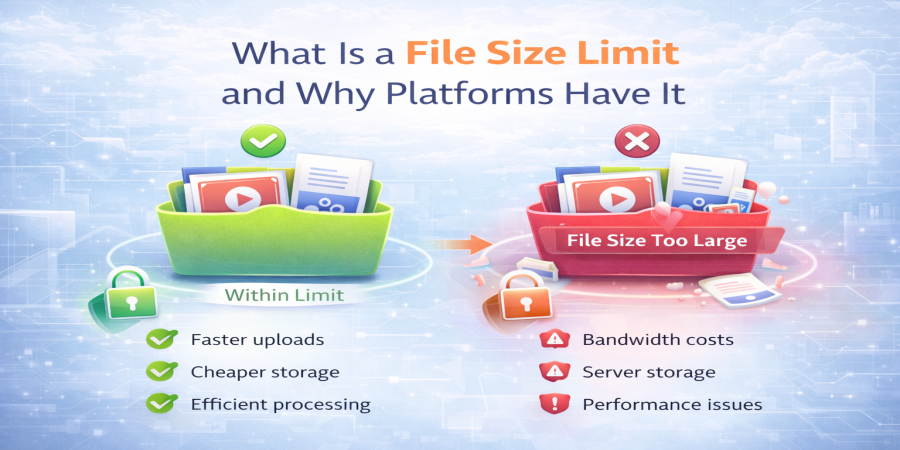
What Is a File Size Limit and Why Platforms Have It
Apr 08, 2026 04:29 PM
Leandro Neto
What Is a File Size Limit and Why Platforms Have It
When uploading files to cloud storage or file-sharing platforms, you may sometimes encounter a restriction known as a file size limit. This limit determines the maximum size a file can have when being uploaded or shared on a platform.
Understanding file size limits helps users manage their uploads better and avoid errors when transferring large files online.
What Is a File Size Limit?
A file size limit is the maximum amount of data that a platform allows for a single file upload. If a file exceeds this limit, the system may block the upload or require the file to be reduced in size.
File size is usually measured in units such as:
- Kilobytes (KB)
- Megabytes (MB)
- Gigabytes (GB)
For example, if a platform has a 2 GB file size limit, users cannot upload a file larger than 2 gigabytes unless the file is compressed or divided into smaller parts.
Why Platforms Set File Size Limits
Many online platforms set file size limits for technical and operational reasons. These limits help maintain performance, security, and stability across the platform.
Here are the most common reasons why file size limits exist.
Server Performance
Large files require more server resources to process and store. By setting limits, platforms can prevent servers from becoming overloaded.
This helps maintain smooth performance for all users.
Storage Management
Every file uploaded to a platform consumes storage space. File size limits help control how storage resources are used and prevent a small number of very large files from consuming too much space.
Faster Upload and Download Speeds
Extremely large files may take a long time to upload or download. By limiting file size, platforms help ensure faster and more reliable file transfers.
Bandwidth Optimization
Large files consume more bandwidth, which can affect the speed of other users on the platform. File size limits help balance bandwidth usage across the system.
Security Protection
File size limits can also help prevent abuse, such as malicious uploads or attempts to overwhelm a system with extremely large files.
File Size Limits for Different Types of Platforms
Different platforms have different file size limits depending on their purpose.
For example:
- Email services often limit attachments to around 20–25 MB.
- Cloud storage platforms may allow files ranging from hundreds of megabytes to several gigabytes.
- Media-sharing platforms may allow very large files for videos or high-resolution images.
The limit depends on the platform’s infrastructure and the type of files it is designed to handle.
What Happens If Your File Is Too Large?
If you try to upload a file that exceeds the size limit, several things may happen:
- The upload may fail automatically.
- The system may show an error message.
- The platform may suggest compressing the file.
- You may need to split the file into smaller parts.
Fortunately, there are several ways to solve this problem.
How to Upload Files That Are Too Large
If your file exceeds the allowed limit, here are some effective solutions.
Compress the File
Using file compression can significantly reduce the file size without losing important data.
Split the File Into Parts
Large files can be divided into smaller segments and uploaded separately.
Remove Unnecessary Data
Sometimes files contain extra elements that increase their size. Removing unnecessary content can reduce the file size.
Use Efficient File Formats
Certain file formats are optimized to use less storage space while maintaining quality.
Why Understanding File Size Limits Is Important
Knowing the file size limits of a platform helps users:
- Avoid upload errors
- Prepare files before uploading
- Manage storage space more efficiently
- Share files faster and more reliably
It also helps ensure a smoother experience when transferring files online.
Conclusion
A file size limit is the maximum size allowed for uploading a single file on a platform. These limits exist to protect server performance, manage storage resources, optimize bandwidth usage, and maintain system stability.
By understanding file size limits and using techniques such as compression or file splitting, users can upload and share files more effectively.
Need a simple way to upload and share your files online?
Upload your files in seconds and generate a secure download link that you can share with anyone.
Start uploading now and make file sharing faster and easier.
Login or create account to leave comments
Popular articles

Optimizing Digital Work: How Cloud Storage, File Sharing, an...
Dec 14, 2025 04:08 PM

Upload and Share Your Files with Ango Files
Dec 14, 2025 03:45 PM

Best Secure Cloud Storage for Business in 2026
Jan 17, 2026 11:19 AM

Best Free Cloud Storage Services in 2026
Apr 03, 2026 07:01 AM

How to Send Large Files Over the Internet for Free (Complete...
Mar 30, 2026 05:19 PM
Categories
Comments (0)