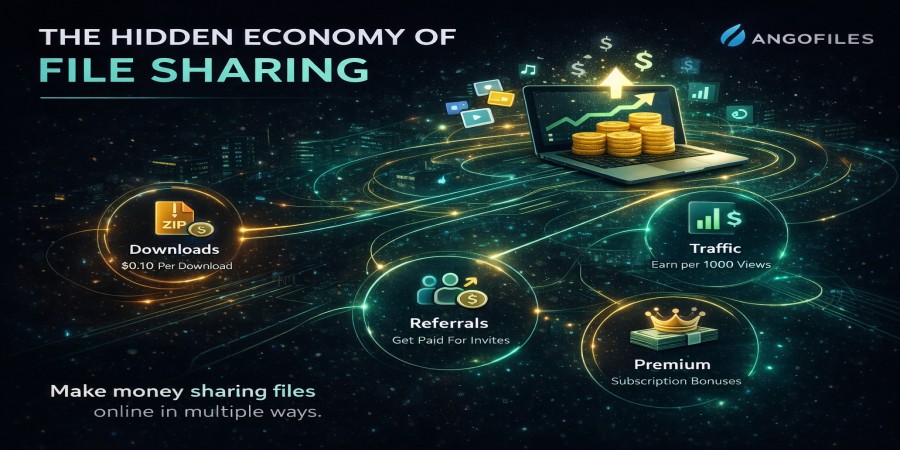
The Hidden Economy of File Sharing
Apr 19, 2026 05:38 PM
Leandro Neto
The Hidden Economy of File Sharing
File sharing is often treated as a simple technical activity: upload a file, generate a link, and let others download it. On the surface, it looks like nothing more than a convenience feature. In reality, file sharing supports a much larger system of value exchange, digital behavior, traffic generation, and monetization. Behind every download link there is usually an economic logic, even if it is not immediately visible.
This is why file sharing should not be understood only as a utility. It is part of a hidden economy that connects creators, audiences, platforms, advertisers, and businesses. Files are not just stored and transferred. They are distributed, discovered, consumed, shared again, and sometimes converted into revenue. That chain of events is what gives file sharing its economic power.
File Sharing Is More Than Storage
Most people think of file sharing as a tool for moving content from one place to another. That is true, but incomplete. A shared file can do much more than deliver information. It can attract attention, generate traffic, build trust, capture leads, and create recurring value.
A single file may function as:
- A marketing asset
- A lead magnet
- A paid digital product
- A traffic source
- A referral mechanism
- A brand-building tool
This is why companies, creators, educators, and independent sellers use file sharing strategically. They are not only moving data. They are building a system around user behavior.
The Real Value Is in Distribution
A file on its own has limited economic power if nobody sees it. The value emerges when the file is distributed effectively. Distribution determines whether the file remains private, becomes popular, or turns into an income-producing asset.
In the hidden economy of file sharing, distribution plays the same role that location plays in real estate. A useful file placed in the right place, promoted to the right audience, and delivered through a reliable system can outperform a much better file that no one ever finds.
That is why successful file sharing depends on three things:
- Relevance
- Accessibility
- Visibility
If a file is valuable but difficult to access, it loses economic potential. If it is easy to access but irrelevant, it also fails. The best results come when value and visibility work together.
Downloads Have Measurable Value
Every download represents interest. That interest can be measured, analyzed, and converted into business outcomes. A download may not always lead directly to money, but it often signals intent. Someone who downloads a guide, template, or resource is usually moving closer to a decision.
That matters because intent is valuable. It is the foundation of digital marketing. A person who downloads a file may later:
- Buy a product
- Subscribe to a list
- Share the file with others
- Return for more content
- Engage with a brand or platform
This makes file sharing a bridge between attention and action. It helps turn passive visitors into active participants.
The Hidden Economy Depends on Trust
No file-sharing system can grow without trust. Users do not download files blindly. They evaluate the source, the title, the description, the format, and the platform hosting the file. If the system looks unreliable, users hesitate.
Trust is economic because it affects conversion. A trusted file-sharing platform increases the likelihood that users will click, download, return, and recommend the service to others. That is why branding, speed, security, and clarity matter so much.
A strong platform does more than host files. It reassures users that their data is safe, their downloads will work, and their time will not be wasted. That trust becomes part of the platform’s value proposition.
File Sharing Creates Indirect Revenue Streams
The hidden economy of file sharing is not limited to direct sales. In many cases, the real earnings come from indirect monetization.
A file can support revenue through:
- Advertising around the download page
- Affiliate links inside the file or landing page
- Upsells to premium content
- Lead generation for future marketing
- Subscription models for repeated access
- Brand exposure for creators and businesses
This is why many digital businesses use free files strategically. They give away something useful in order to gain something more valuable later. The file itself may not be the product. It may be the entry point into a larger funnel.
Scarcity and Exclusivity Increase Value
Not all files are treated equally. Some files become more valuable because they are hard to find, time-sensitive, or exclusive. Scarcity increases demand. When users believe a file is rare or not easily available elsewhere, they are more likely to download it quickly and share it widely.
This is especially true for:
- Templates
- Reports
- Educational resources
- Digital tools
- Premium guides
- Niche content
The economic logic here is simple: scarcity creates urgency, and urgency increases action. That is why file titles, release timing, and distribution channels can significantly affect performance.
Attention Is the Real Currency
In the hidden economy of file sharing, the file itself is only part of the story. Attention is the real currency.
A file that captures attention can generate traffic for days, weeks, or even months. It can bring users to a platform, introduce them to a brand, or keep them engaged with related content. In this sense, file sharing is not just about delivery. It is about earning attention in a crowded digital environment.
The more attention a file receives, the more it can influence behavior. That influence may lead to downloads, subscriptions, purchases, or shares. This is why businesses invest heavily in presentation, search optimization, and promotion. They are competing not only for downloads, but for attention itself.
Why File Sharing Has Become an Industry
What began as a simple internet feature has evolved into a full digital industry. File sharing now powers cloud platforms, content distribution systems, digital product businesses, educational portals, creative marketplaces, and marketing funnels.
This growth happened because file sharing solves a universal problem: how to move information efficiently. As the amount of digital content increased, the demand for reliable sharing systems also grew. Today, the platforms that manage files well are part of a broader infrastructure economy.
That infrastructure has real economic impact. It supports productivity, commerce, learning, collaboration, and communication. It also creates opportunities for entrepreneurs who understand how to package and distribute value effectively.
File Sharing and the Creator Economy
The rise of the creator economy has made file sharing even more important. Creators now use files to distribute e-books, templates, presets, scripts, worksheets, courses, and exclusive resources. A file can be the product itself, or it can support a larger content strategy.
For creators, file sharing is powerful because it makes digital products easy to deliver at scale. One file can be downloaded thousands of times without additional production cost. That creates a strong leverage effect. A creator can produce once and distribute many times.
This is one of the clearest examples of hidden economic value. The file becomes a reusable asset that can keep generating returns long after the initial work is done.
The Role of Platforms Like AngoFiles
Platforms such as AngoFiles sit at the center of this economy. They do more than store files. They provide the infrastructure that allows users to upload, organize, share, and access digital content quickly and reliably.
For users, that means convenience. For creators and businesses, it means scalability. A reliable file-sharing platform can support content distribution, audience growth, and monetization at the same time.
That is where the real opportunity lies. When a platform makes file sharing fast, secure, and easy to manage, it unlocks the hidden economic value of every upload.
Why This Economy Will Keep Growing
The hidden economy of file sharing is still expanding because digital behavior keeps changing. More people are working remotely, learning online, buying digital products, and sharing content across multiple channels. File sharing fits naturally into all of these behaviors.
As long as people need to send, sell, store, and distribute information, file sharing will remain economically relevant. The format may evolve, the tools may improve, but the underlying principle will stay the same: value moves through files.
That is why file sharing is not a minor technical function. It is part of the digital economy’s foundation.
Conclusion
The hidden economy of file sharing is built on more than uploads and downloads. It is powered by attention, trust, distribution, scarcity, and repeated use. A file can inform, persuade, convert, and monetize. It can support creators, businesses, and platforms in ways that are not always visible at first glance.
Once you understand this, file sharing stops looking like a simple utility and starts looking like an economic system. The file itself is only the beginning. The real value comes from what happens after it is shared.
Grow Your File Sharing Business with AngoFiles
If you want to turn file sharing into a real digital advantage, AngoFiles gives you the tools to do it. Upload your files, generate secure links, organize your content, and build a system that supports traffic, trust, and long-term value.
Start using AngoFiles today and tap into the hidden economy behind every download.
Login or create account to leave comments
Popular articles
Optimizing Digital Work: How Cloud Storage, File Sharing, an...
Dec 14, 2025 04:08 PM

Upload and Share Your Files with Ango Files
Dec 14, 2025 03:45 PM

Best Secure Cloud Storage for Business in 2026
Jan 17, 2026 11:19 AM

Best Free Cloud Storage Services in 2026
Apr 03, 2026 07:01 AM

How to Send Large Files Over the Internet for Free (Complete...
Mar 30, 2026 05:19 PM
Categories
Comments (0)