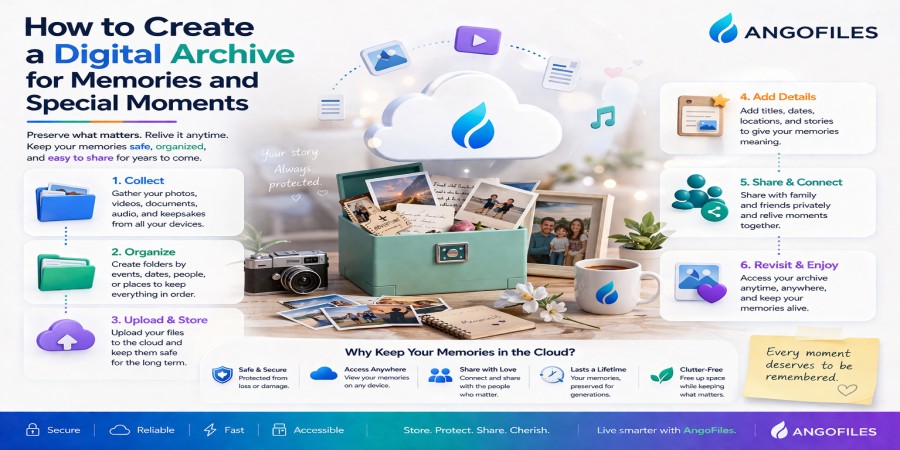
How to Create a Digital Archive for Memories and Special Moments
Apr 28, 2026 01:47 PM
Leandro Neto
How to Create a Digital Archive for Memories and Special Moments
Memories are one of the most valuable things people keep, but they are also some of the easiest to lose. Photos sit in random phone folders, videos get buried in chats, screenshots are forgotten, and important moments disappear into devices that may one day fail. That is why creating a digital archive for memories and special moments is so important.
A digital archive is more than a storage folder. It is a system designed to preserve the moments that matter most. It helps you keep your memories organized, protected, searchable, and accessible over time. Instead of letting your photos and videos scatter across devices and apps, you create one place where your personal history is collected with care.
If done well, a digital archive becomes a living record of your life.
Why a Digital Archive Matters
Most people do not lose memories because they stop caring about them. They lose them because they never created a proper system for preserving them. A camera roll full of hundreds or thousands of images may feel safe, but if the files are not organized or backed up, they remain at risk.
A digital archive solves that problem. It gives structure to personal memories and protects them from device failure, accidental deletion, storage issues, and forgotten files. It also makes it easier to revisit important moments later, whether that is a family celebration, a trip, a graduation, or a simple everyday memory that later becomes priceless.
A good archive does two things at once. It protects the past and makes it easier to enjoy in the future.
Step 1: Decide What Belongs in the Archive
The first step is to choose what you want to preserve. Not every file needs to be archived, but the most meaningful ones should be.
You may want to include:
- Family photos
- Travel pictures
- Videos of special events
- Birthdays, weddings, and celebrations
- Milestones like graduations or first days
- Voice notes or audio memories
- Important scanned documents with personal value
- Screenshots or images tied to meaningful moments
The goal is not to save everything blindly. The goal is to preserve what has emotional, personal, or historical value.
Step 2: Gather Files from All Your Devices
Memories are often scattered. Some are on your phone, some on your laptop, some in messaging apps, and some on old storage cards or drives. Before you can build a proper archive, you need to collect those files in one place.
This part can take time, but it is worth it. A good archive should not depend on memory alone. Go through all your devices and gather the photos, videos, and files you want to keep. This creates a clean starting point.
Once everything is in one location, it becomes much easier to organize and protect.
Step 3: Organize by Year, Event, or Theme
A digital archive works best when it follows a clear structure. There is no single correct format, but the key is consistency.
You can organize by:
- Year
- Month
- Event
- Person
- Theme
- Location
For example:
Memories
- 2023
- Family Events
- Travel
- Holidays
- 2024
- Birthdays
- School Moments
- Special Trips
If you prefer, you can organize by theme instead:
Memories
- Family
- Travel
- Celebrations
- Childhood
- Personal Milestones
What matters most is that you can easily find what you are looking for later. A good archive should feel intuitive, not complicated.
Step 4: Use Clear File Names
File names are one of the most overlooked parts of digital archiving. A photo named “IMG_2049” tells you nothing later. A file named “Family_Birthday_2024_01” is much more useful.
Clear naming helps you identify the content without opening the file. It also makes searching much easier. When the archive grows larger, meaningful names become essential.
A useful naming style might include:
- Date
- Event
- Person or location
- Short description
Examples:
- 2024-12-25_Family_Christmas_Dinner.jpg
- 2023-07-18_Trip_to_Lisbon.mp4
- 2022-10-05_Graduation_Ceremony.jpg
The more consistent your naming system is, the easier your archive becomes to manage.
Step 5: Back Up the Archive Properly
A digital archive is only useful if it is safe. That means backing it up is not optional.
You should keep more than one copy of your archive in different places if possible. That way, if one device fails, the memories are not lost. The archive can live in cloud storage, on an external drive, or in another secure backup location.
The important thing is separation. Never rely on only one copy. A single device is not enough for something as valuable as your memories.
A strong archive is one that can survive loss, damage, or accidental deletion.
Step 6: Add Context to Your Memories
A photo or video becomes even more meaningful when it has context. Years later, you may not remember where a picture was taken or why a video matters. That is why it helps to add notes, captions, or short descriptions to special files.
You might include:
- who is in the photo
- where it was taken
- what event it captured
- why it matters to you
This turns your archive from a collection of files into a personal memory library. It becomes easier to relive the moment, not just store it.
Step 7: Keep It Updated Regularly
A digital archive should not be created once and forgotten. It needs regular updates. New memories are made all the time, and if you do not add them consistently, the archive becomes incomplete.
A good habit is to review and update your archive every week, month, or after major events. Move important new files into the right folders, rename them properly, and back them up.
Consistency is what turns a folder into a true archive.
Step 8: Separate Everyday Files from Special Memories
Not every photo or video deserves a place in the archive. Some files are just temporary. Others are special enough to preserve. It helps to separate casual everyday content from the moments that truly matter.
You can keep a working folder for everyday media and an archive folder for special memories. That way, your archive stays meaningful and does not become cluttered with unnecessary files.
This separation keeps the archive clean and gives your most important moments the attention they deserve.
Step 9: Make It Easy to Access Later
A digital archive should be protected, but it should also be usable. If the system is too complicated, you will not enjoy it later. The best archives are those you can revisit easily whenever you want to see a memory again.
That means:
- simple folder structure
- clear names
- easy search
- reliable storage
- accessible backup copies
If your archive is well designed, revisiting it becomes enjoyable instead of frustrating.
Step 10: Think Long-Term
A digital archive is not only for now. It is for years from now, and possibly for future generations. That is why long-term thinking matters.
File formats should be stable and readable. Storage should be maintained. Backups should be refreshed. Organization should remain clear enough that someone else could understand it later if needed.
A good archive is built to last, not just to look neat today.
A Simple Archive Structure You Can Use
Here is one practical model:
Digital Archive
- 2022
- Family
- Travel
- Celebrations
- 2023
- Family
- Travel
- Milestones
- 2024
- Family
- Travel
- Special Events
- Audio Notes
- Video Memories
- Scanned Keepsakes
This structure is simple, scalable, and easy to understand. You can adjust it to match your own life and the kinds of memories you want to preserve.
Why This Becomes More Valuable Over Time
At first, archiving memories may seem like a small task. But over time, it becomes one of the most meaningful digital habits you can build. The longer your archive exists, the more valuable it becomes.
Old memories become harder to recover as devices change and files get scattered. A proper archive preserves them before that happens.
This is not just storage. It is preservation.
Conclusion
Creating a digital archive for memories and special moments means building a system that protects your personal history. It begins with collecting meaningful files, organizing them clearly, naming them well, backing them up properly, and keeping them updated over time.
A strong archive does more than hold photos and videos. It keeps your memories safe, makes them easier to find, and helps you revisit the moments that matter most.
Your memories deserve more than random folders. They deserve a home.
Preserve Your Memories with AngoFiles
With AngoFiles, you can store, organize, and protect your most important memories in one reliable place. Build a digital archive for your photos, videos, and special moments, and keep them accessible for years to come.
Start using AngoFiles today and create a safe home for your memories.
Login or create account to leave comments
Popular articles
Optimizing Digital Work: How Cloud Storage, File Sharing, an...
Dec 14, 2025 04:08 PM
Upload and Share Your Files with Ango Files
Dec 14, 2025 03:45 PM

Best Secure Cloud Storage for Business in 2026
Jan 17, 2026 11:19 AM

Best Free Cloud Storage Services in 2026
Apr 03, 2026 07:01 AM

How to Send Large Files Over the Internet for Free (Complete...
Mar 30, 2026 05:19 PM
Categories
Comments (0)