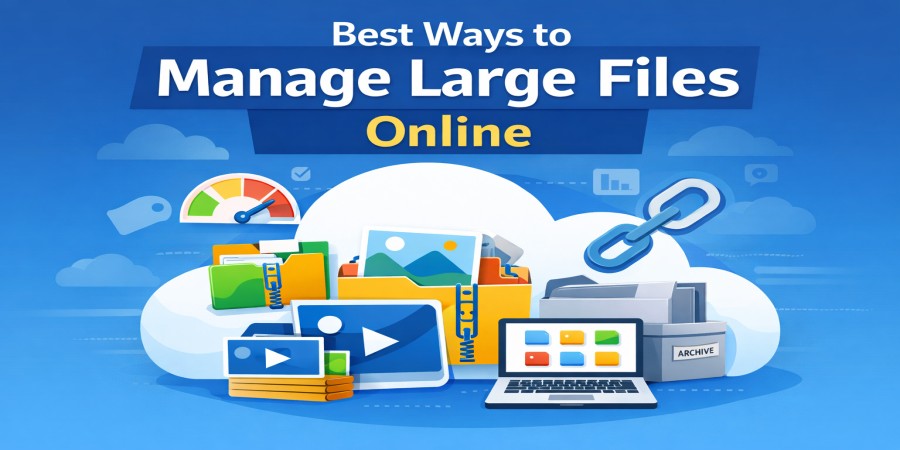
Best Ways to Manage Large Files Online
Apr 01, 2026 05:21 AM
Leandro Neto
Best Ways to Manage Large Files Online
As digital content continues to grow, managing large files has become an important challenge for individuals and businesses. High-resolution videos, design projects, software files, and large document archives can quickly consume storage space and become difficult to organize.
Handling these files efficiently requires the right strategies and tools. Online storage solutions allow users to upload, organize, and share large files without depending only on local devices.
Platforms like AngoFiles provide convenient ways to store and manage large digital files securely while keeping them accessible from anywhere.
In this guide, we explore the best ways to manage large files online effectively.
Use Cloud Storage for Large Files
One of the most effective ways to manage large files is by storing them in cloud storage.
Instead of filling up your computer or smartphone storage, cloud platforms allow you to upload files to secure online servers.
Benefits of cloud storage include:
- remote access from multiple devices
- secure backup of important files
- easier sharing with others
- reduced storage pressure on local devices
Using a cloud storage platform helps keep large files organized and accessible.
Compress Files Before Uploading
File compression is a useful technique for reducing file size before uploading.
Compressed files take less storage space and upload faster. Common compressed formats include:
- ZIP files
- RAR files
- 7Z files
Compression is especially useful when uploading folders containing multiple files.
Organize Files with Clear Folder Structures
Large files can quickly become difficult to locate if they are not organized properly.
Creating a clear folder structure helps keep files manageable.
Example structure:
Projects
- Videos
- Design Files
- Documents
Media
- Photos
- Audio
- Graphics
Organizing files into logical folders makes navigation easier and saves time.
Use Descriptive File Names
When working with large files, clear naming is extremely important.
Avoid generic file names like:
- video1
- file_final
- document_new
Instead, use descriptive names such as:
- Product_Demo_Video_2026
- Marketing_Campaign_Design
- Client_Presentation_Final
This makes it easier to identify files quickly without opening them.
Delete or Archive Old Files
Over time, large files accumulate and take up valuable storage space.
Regularly reviewing your storage helps identify files that are no longer needed.
Options include:
- deleting unnecessary files
- moving old files to an archive folder
- backing up important files separately
This keeps your storage system efficient and organized.
Use Secure File Sharing Methods
Large files are often shared with colleagues, clients, or collaborators.
Instead of sending large attachments through email, online storage allows users to generate download links for easy file sharing.
Secure sharing features may include:
- password-protected links
- expiration dates
- access permissions
These tools help protect your files while making collaboration easier.
Monitor Storage Usage
Managing large files requires monitoring how much storage space is being used.
Checking your storage regularly helps you:
- avoid running out of space
- identify duplicate files
- maintain better file organization
Efficient storage management improves productivity and keeps your digital workspace clean.
Benefits of Managing Large Files Online
Managing large files online provides several advantages:
Accessibility
Files can be accessed from anywhere.
Better Organization
Structured storage systems make navigation easier.
Improved Collaboration
Large files can be shared quickly with teams or clients.
Data Protection
Online storage helps protect files from device failure.
Platforms such as AngoFiles make it easier to upload, store, and manage large files securely online.
Conclusion
Managing large files online does not have to be complicated. By using cloud storage, compressing files, organizing folders, and maintaining clear naming systems, users can handle large digital files more efficiently.
These strategies help keep files accessible, organized, and secure while improving productivity.
As digital content continues to grow, learning how to manage large files online will remain an essential skill for modern users.
Looking for a reliable way to store and manage large files online?
Start using AngoFiles to upload, organize, and share your files securely from anywhere.
Visit:
https://angofiles.com
Login or create account to leave comments
Popular articles
Optimizing Digital Work: How Cloud Storage, File Sharing, an...
Dec 14, 2025 04:08 PM

Upload and Share Your Files with Ango Files
Dec 14, 2025 03:45 PM

Best Secure Cloud Storage for Business in 2026
Jan 17, 2026 11:19 AM

Best Free Cloud Storage Services in 2026
Apr 03, 2026 07:01 AM

How to Send Large Files Over the Internet for Free (Complete...
Mar 30, 2026 05:19 PM
Categories
Comments (0)